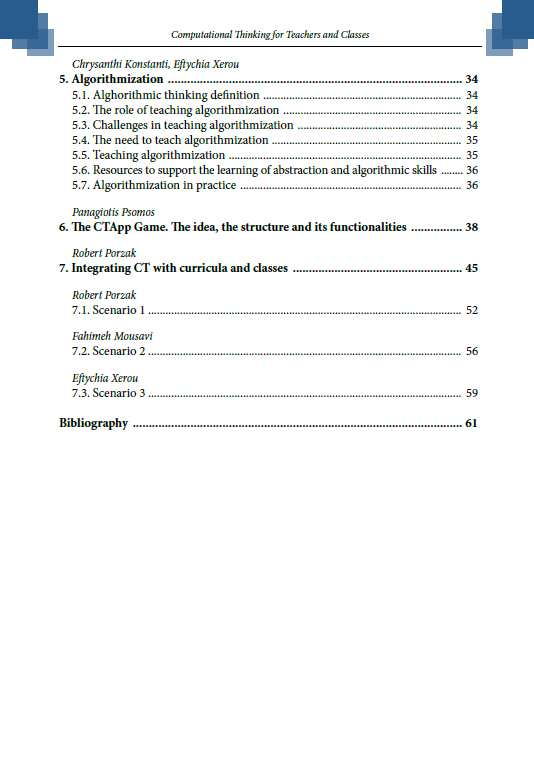
Opis
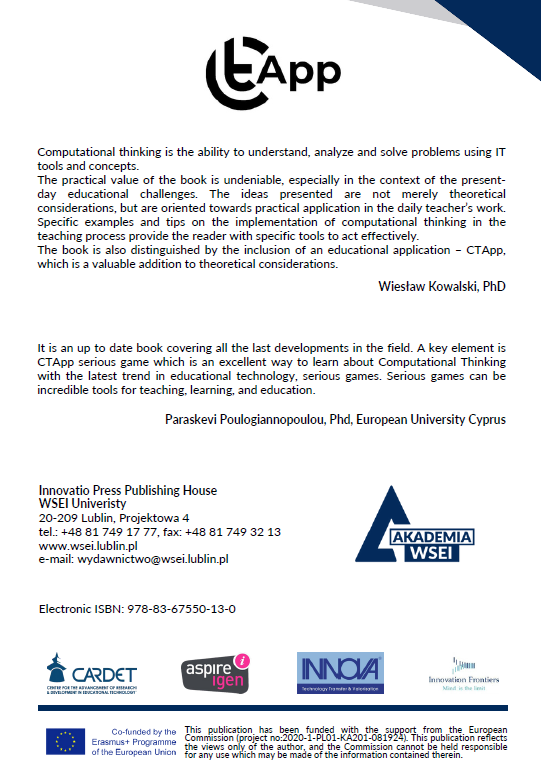
This publication has been funded with the support from the European Commission (project no: 2020-1-PL01-KA201-081924).
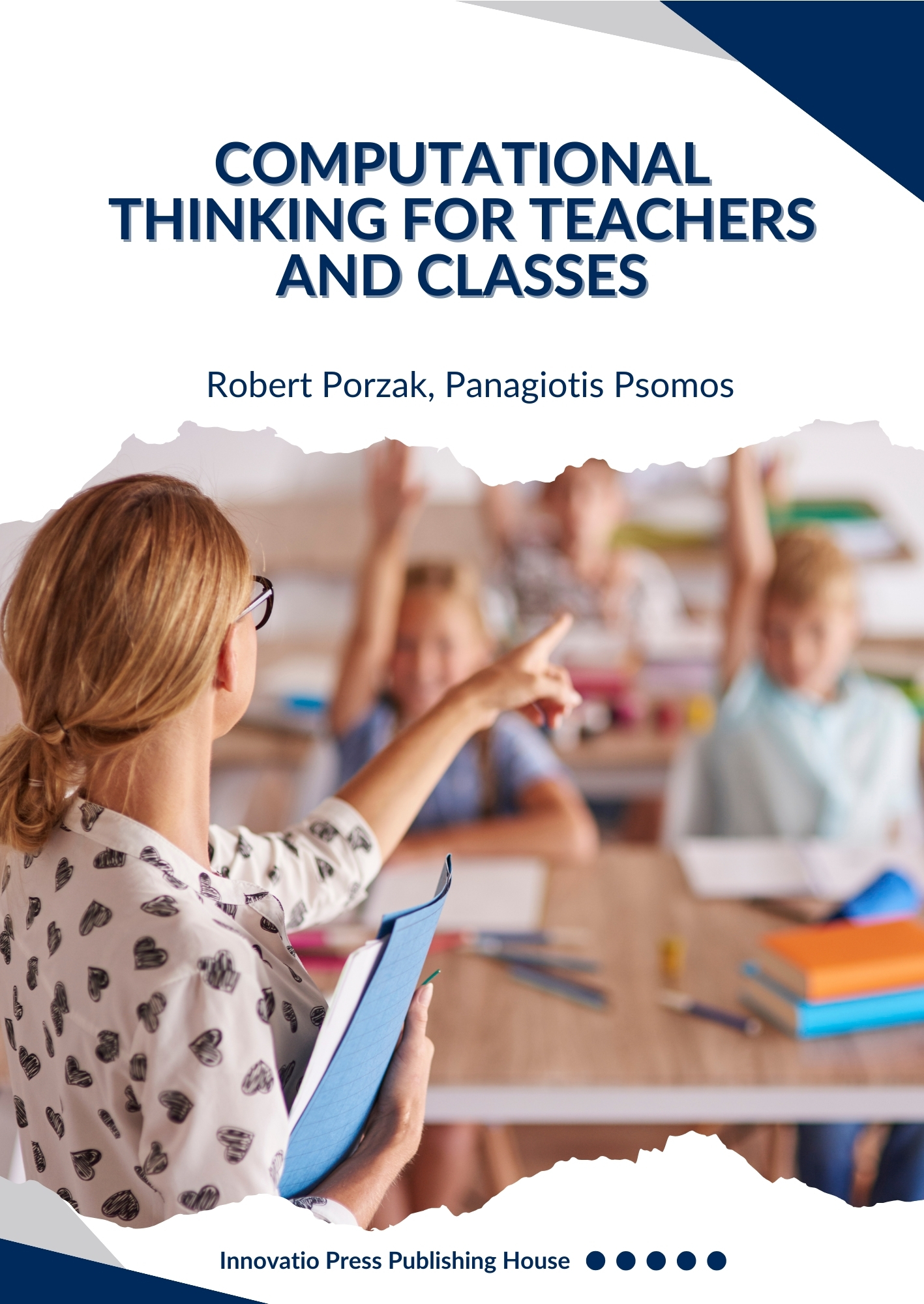
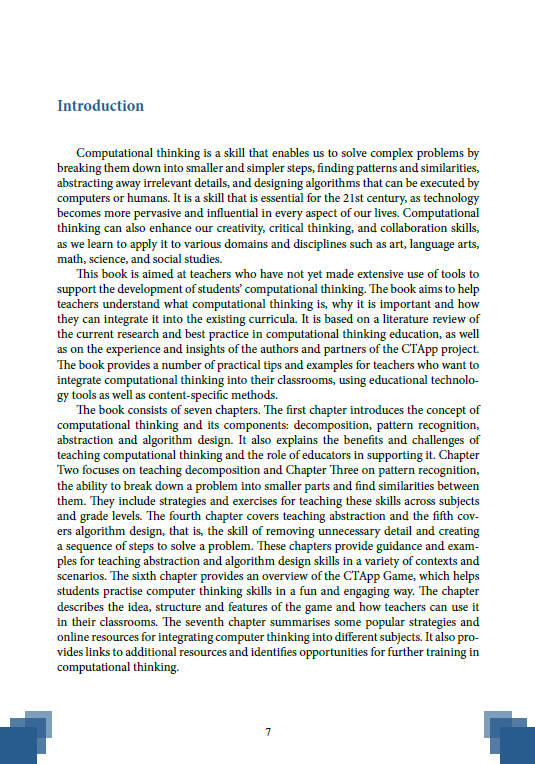
Computational thinking is a skill that enables us to solve complex problems by breaking them down into smaller and simpler steps, finding patterns and similarities, abstracting away irrelevant details, and designing algorithms that can be executed by computers or humans. It is a skill that is essential for the 21st century, as technology becomes more pervasive and influential in every aspect of our lives. Computational thinking can also enhance our creativity, critical thinking, and collaboration skills, as we learn to apply it to various domains and disciplines such as art, language arts, math, science, and social studies. This book is aimed at teachers who have not yet made extensive use of tools to support the development of students’ computational thinking. The book aims to help teachers understand what computational thinking is, why it is important and how they can integrate it into the existing curricula. It is based on a literature review of the current research and best practice in computational thinking education, as well as on the experience and insights of the authors and partners of the CTApp project. The book provides a number of practical tips and examples for teachers who want to integrate computational thinking into their classrooms, using educational technology tools as well as content-specific methods.