Opis
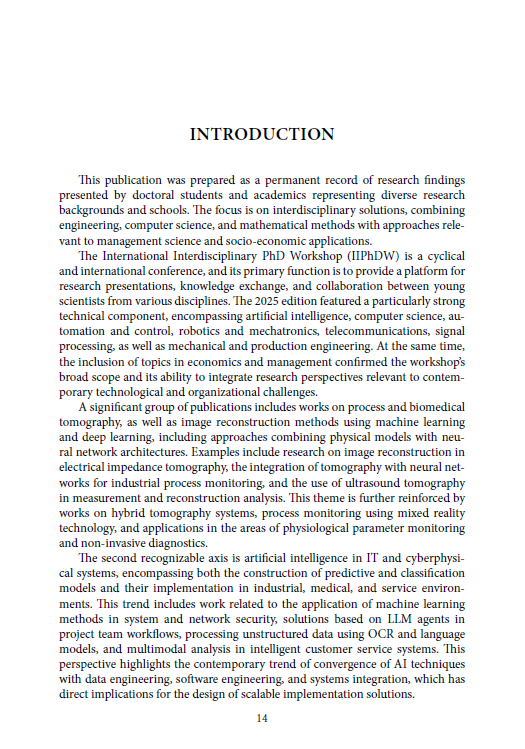
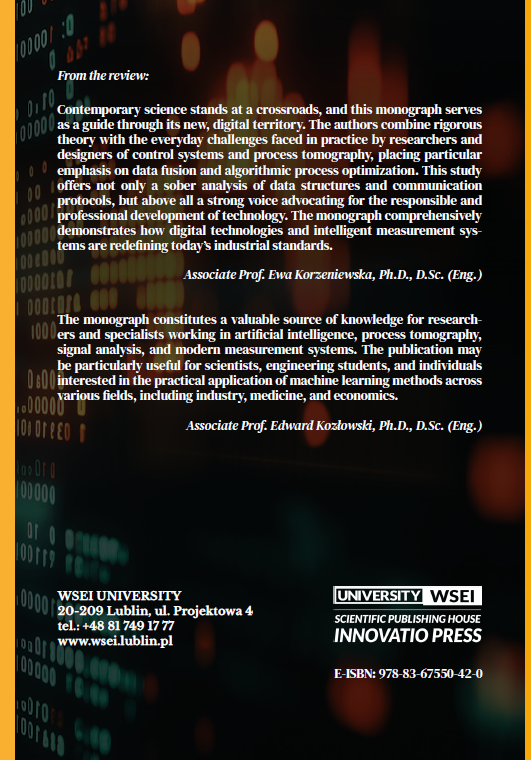
This publication was prepared as a permanent record of research findings presented by doctoral students and academics representing diverse research backgrounds and schools. The focus is on interdisciplinary solutions, combining engineering, computer science, and mathematical methods with approaches relevant to management science and socio-economic applications.
The International Interdisciplinary PhD Workshop (IIPhDW) is a cyclical and international conference, and its primary function is to provide a platform for research presentations, knowledge exchange, and collaboration between young scientists from various disciplines. The 2025 edition featured a particularly strong technical component, encompassing artificial intelligence, computer science, automation and control, robotics and mechatronics, telecommunications, signal processing, as well as mechanical and production engineering. At the same time, the inclusion of topics in economics and management confirmed the workshop’s broad scope and its ability to integrate research perspectives relevant to contemporary technological and organizational challenges.
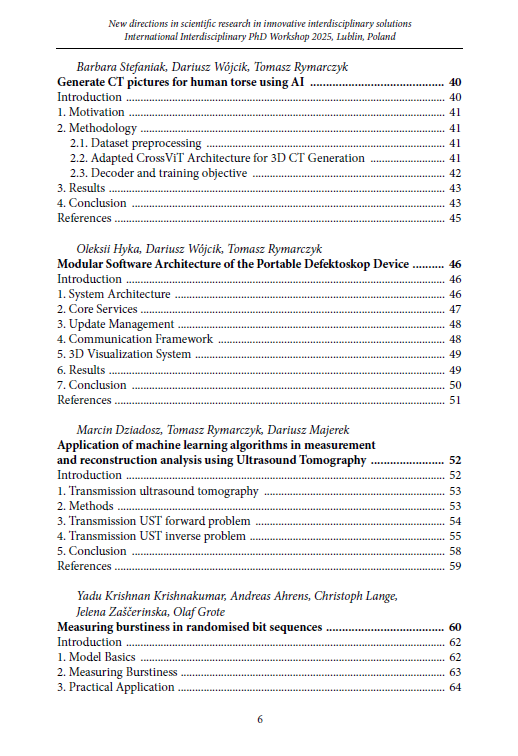
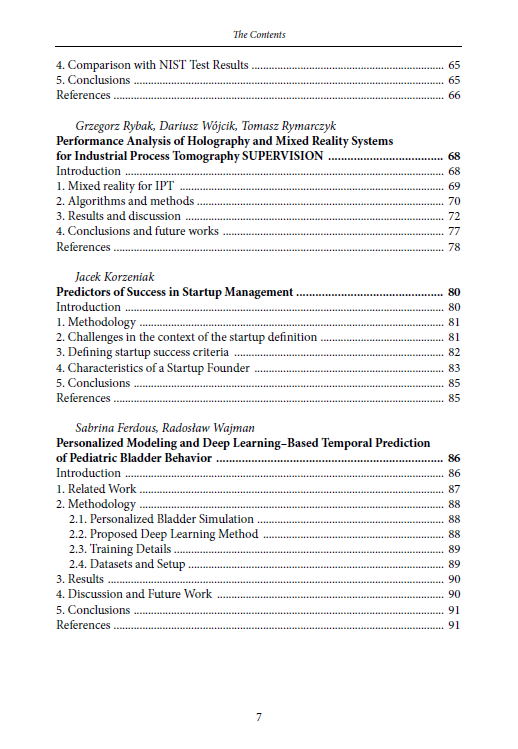
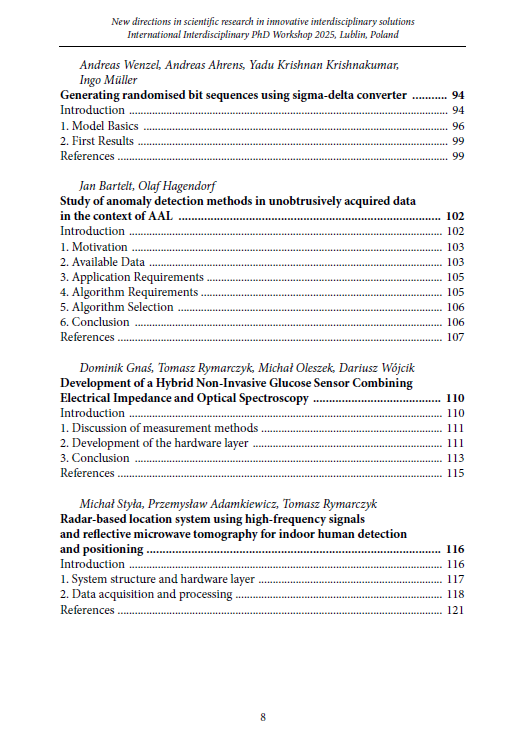
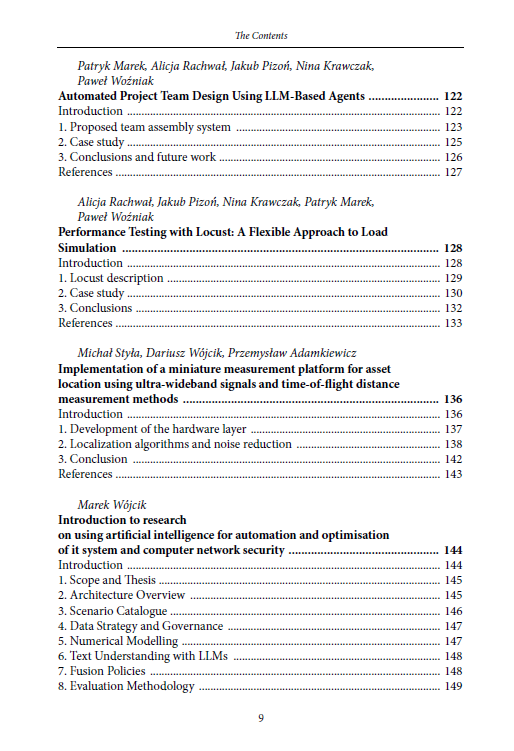
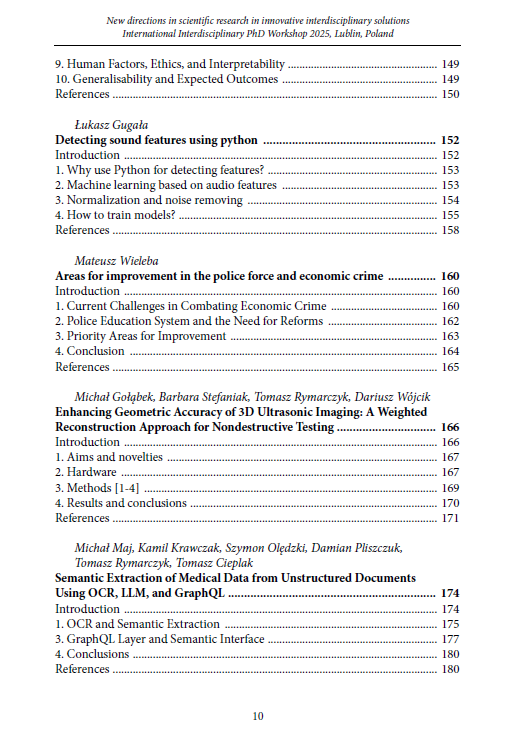
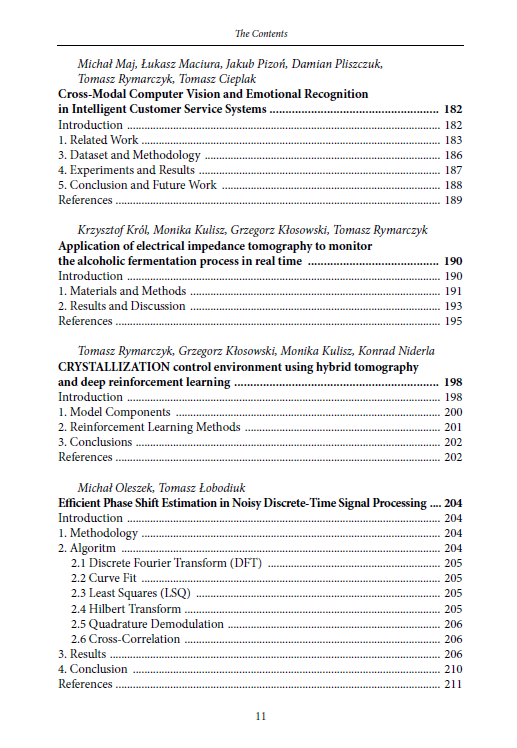
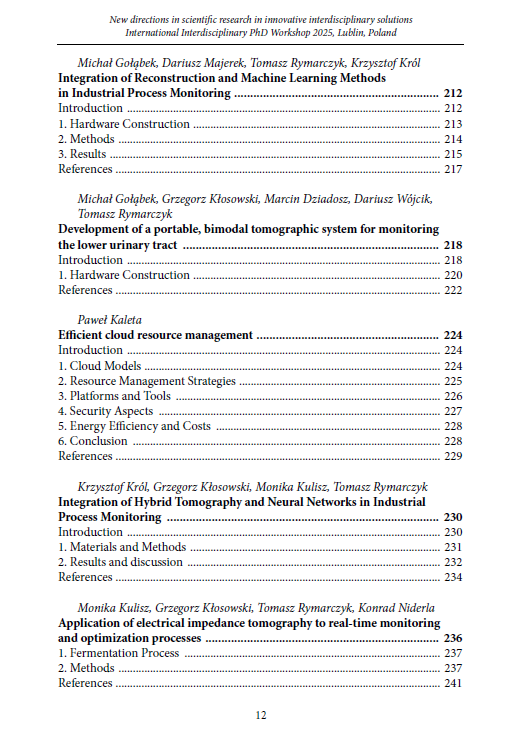
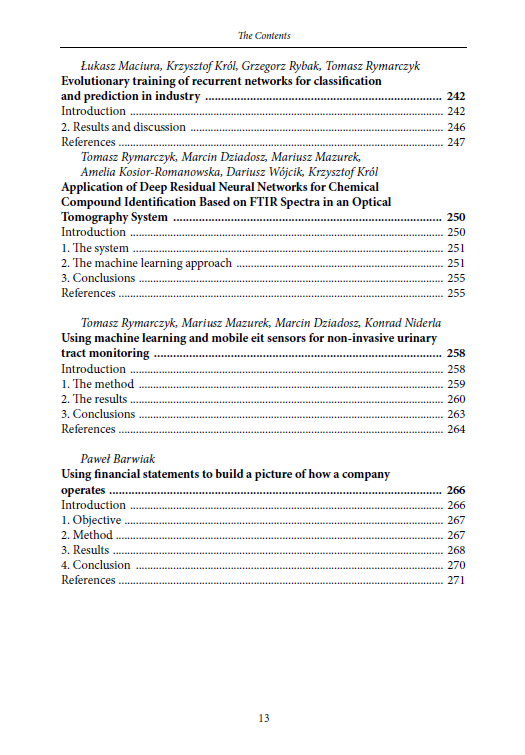
A significant group of publications includes works on process and biomedical tomography, as well as image reconstruction methods using machine learning and deep learning, including approaches combining physical models with neural network architectures. Examples include research on image reconstruction in electrical impedance tomography, the integration of tomography with neural networks for industrial process monitoring, and the use of ultrasound tomography in measurement and reconstruction analysis. This theme is further reinforced by works on hybrid tomography systems, process monitoring using mixed reality technology, and applications in the areas of physiological parameter monitoring and non-invasive diagnostics.
The second recognizable axis is artificial intelligence in IT and cyberphysical systems, encompassing both the construction of predictive and classification models and their implementation in industrial, medical, and service environments. This trend includes work related to the application of machine learning methods in system and network security, solutions based on LLM agents in project team workflows, processing unstructured data using OCR and language models, and multimodal analysis in intelligent customer service systems. This perspective highlights the contemporary trend of convergence of AI techniques with data engineering, software engineering, and systems integration, which has direct implications for the design of scalable implementation solutions.
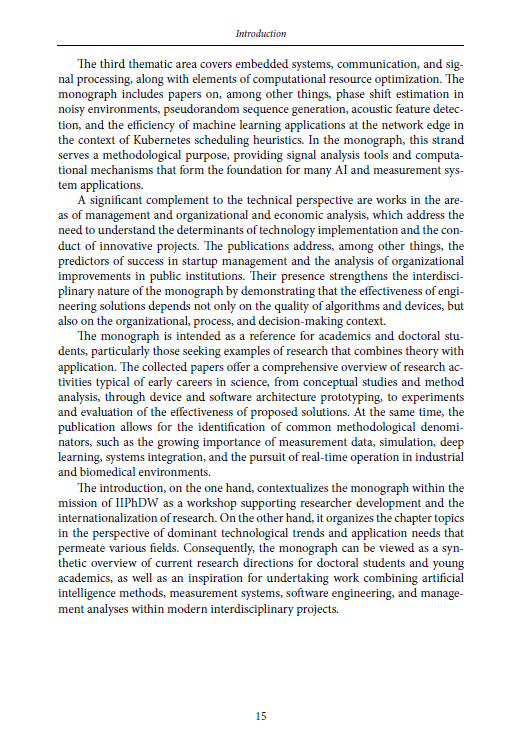
The third thematic area covers embedded systems, communication, and signal processing, along with elements of computational resource optimization. The monograph includes papers on, among other things, phase shift estimation in noisy environments, pseudorandom sequence generation, acoustic feature detection, and the efficiency of machine learning applications at the network edge in the context of Kubernetes scheduling heuristics. In the monograph, this strand serves a methodological purpose, providing signal analysis tools and computational mechanisms that form the foundation for many AI and measurement system applications.
A significant complement to the technical perspective are works in the areas of management and organizational and economic analysis, which address the need to understand the determinants of technology implementation and the conduct of innovative projects. The publications address, among other things, the predictors of success in startup management and the analysis of organizational improvements in public institutions. Their presence strengthens the interdisciplinary nature of the monograph by demonstrating that the effectiveness of engineering solutions depends not only on the quality of algorithms and devices, but also on the organizational, process, and decision-making context.
The monograph is intended as a reference for academics and doctoral students, particularly those seeking examples of research that combines theory with application. The collected papers offer a comprehensive overview of research activities typical of early careers in science, from conceptual studies and method analysis, through device and software architecture prototyping, to experiments and evaluation of the effectiveness of proposed solutions. At the same time, the publication allows for the identification of common methodological denominators, such as the growing importance of measurement data, simulation, deep learning, systems integration, and the pursuit of real-time operation in industrial and biomedical environments.
The introduction, on the one hand, contextualizes the monograph within the mission of IIPhDW as a workshop supporting researcher development and the internationalization of research. On the other hand, it organizes the chapter topics in the perspective of dominant technological trends and application needs that permeate various fields. Consequently, the monograph can be viewed as a synthetic overview of current research directions for doctoral students and young academics, as well as an inspiration for undertaking work combining artificial intelligence methods, measurement systems, software engineering, and management analyses within modern interdisciplinary projects.